


Heat and drought
03/08/2026
Whilst forest fires are wreaking havoc in France and Spain, an orange alert remains in force across Belgium and even Scotland – usually so wet – is being ravaged by wildfires, our garden, too, is suffering under the persistent heat and drought.
In July, barely 2 mm of rain fell into our rain gauge. Meanwhile, our supply of 12,720 litres of rainwater has been completely used up, and it is only early August. That is exceptionally early and gives food for thought. Worrying.
We live on the edge of a woodland, in a natural garden with trees, hedges, shrubs, flower meadows and a pond. Most of our plants are hardy native species that are perfectly adapted to our soil and climate. So they should be able to cope with a bit of rough and tumble. But what if that climate becomes more extreme year after year?
Let me take you on a brief tour of our garden and share my thoughts.
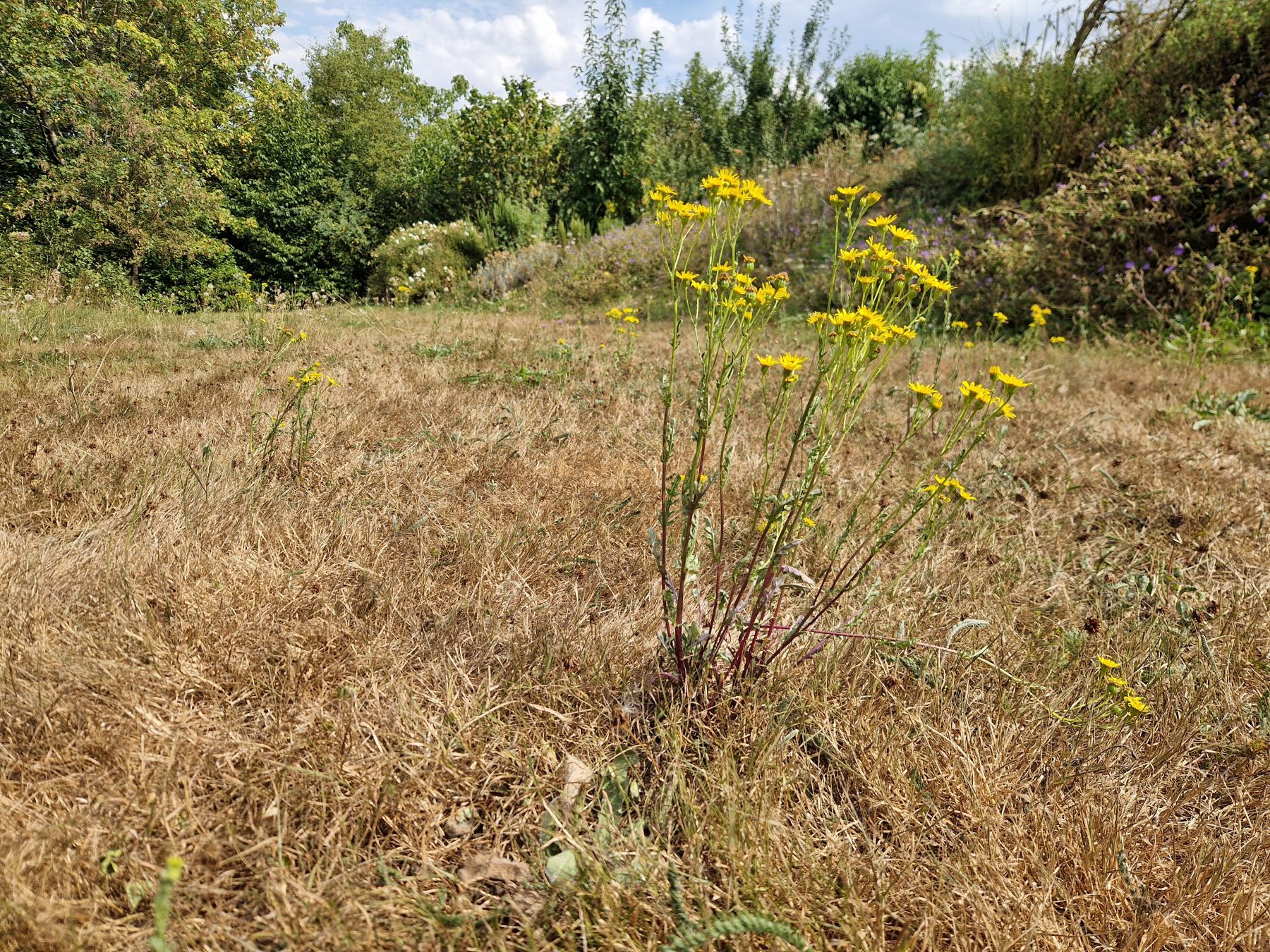
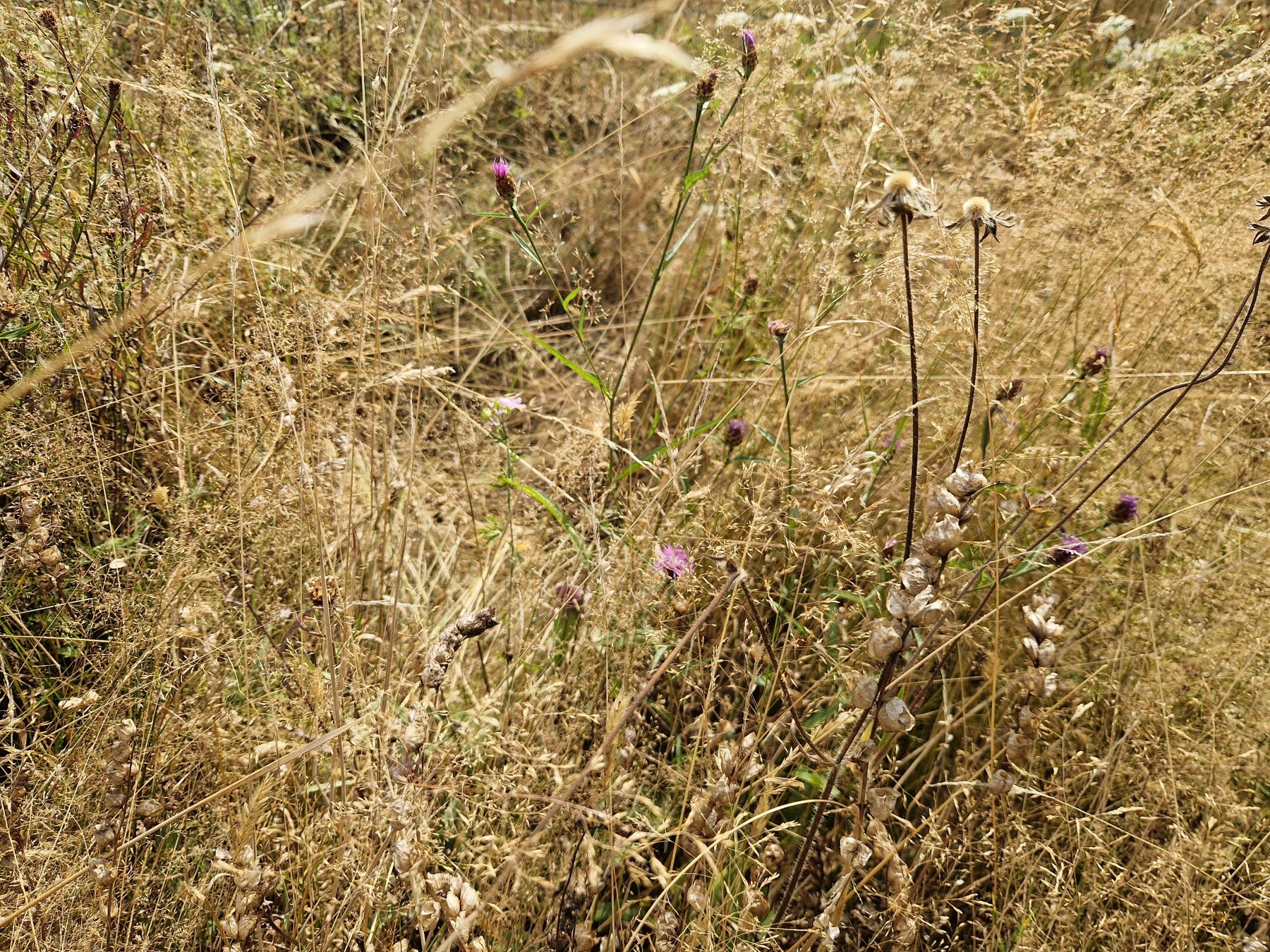
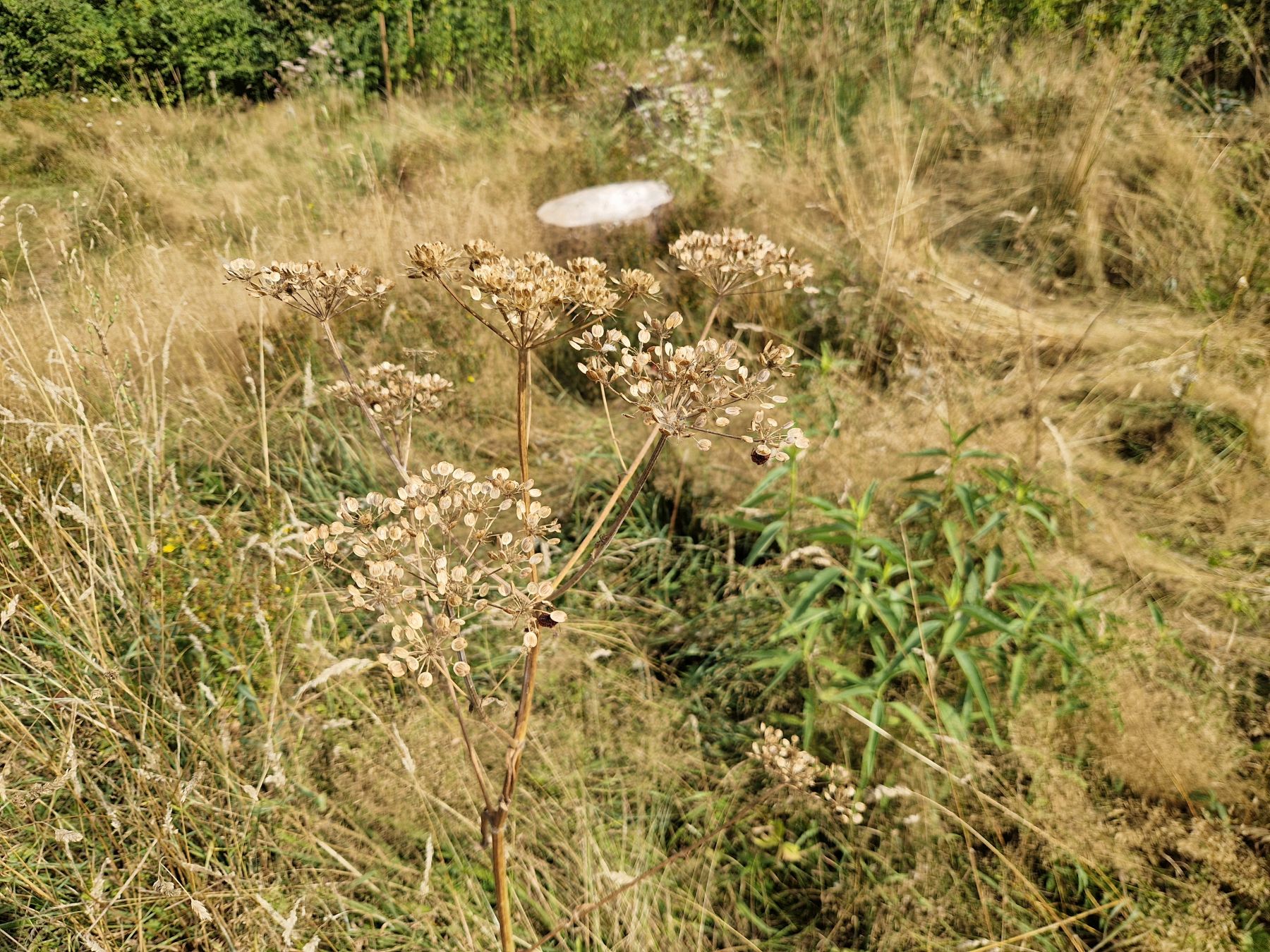
The lawn paths have turned into a brown carpet. The flower meadow looks more like a yellow prairie, with a few flowers here and there amongst the dried-out stems. Only the part of the hay meadow that we mowed at the end of May is still green.
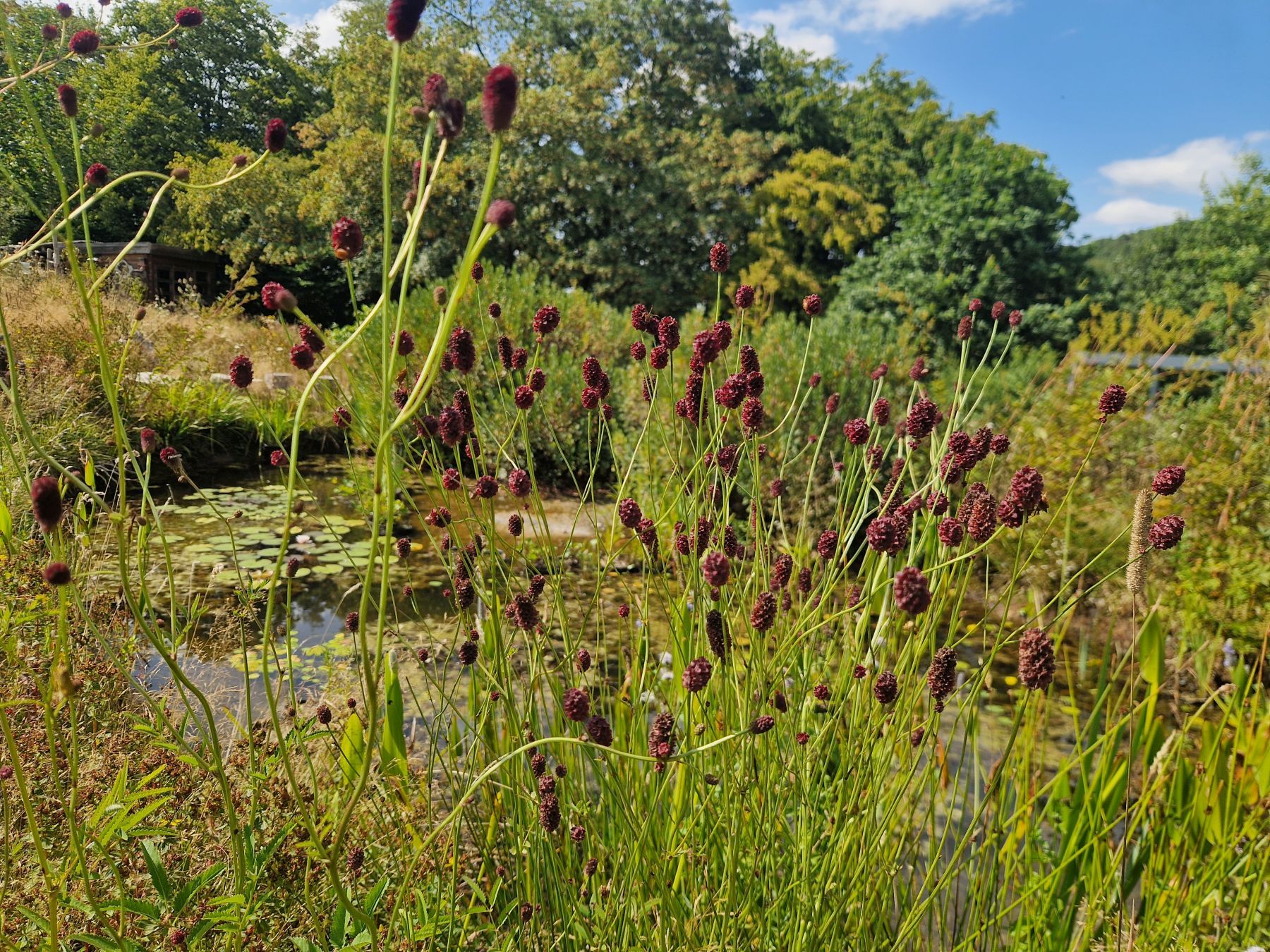
The water level in our pond is over twenty centimetres lower due to evaporation, and our shallow, much-visited little beach is dry.
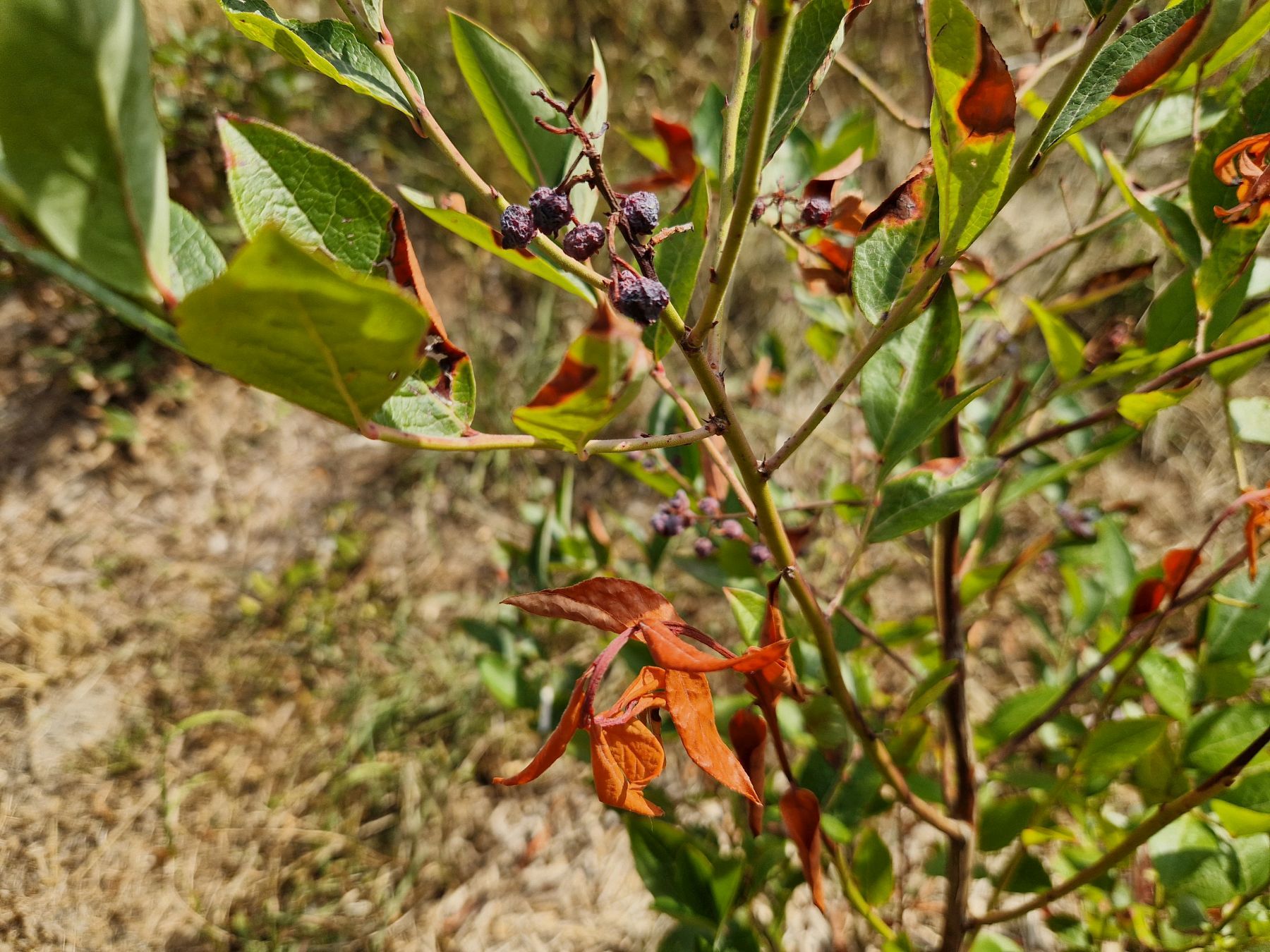
Our berry bushes are having a hard time of it. Many leaves show signs of sunburn. The blueberries produced an impressive harvest for the first time this year, but the berries are shrivelling on the bush. The plums seem to have temporarily halted their growth: they are barely ripening and are falling to the ground prematurely. Fortunately, apples and grapes are faring better.
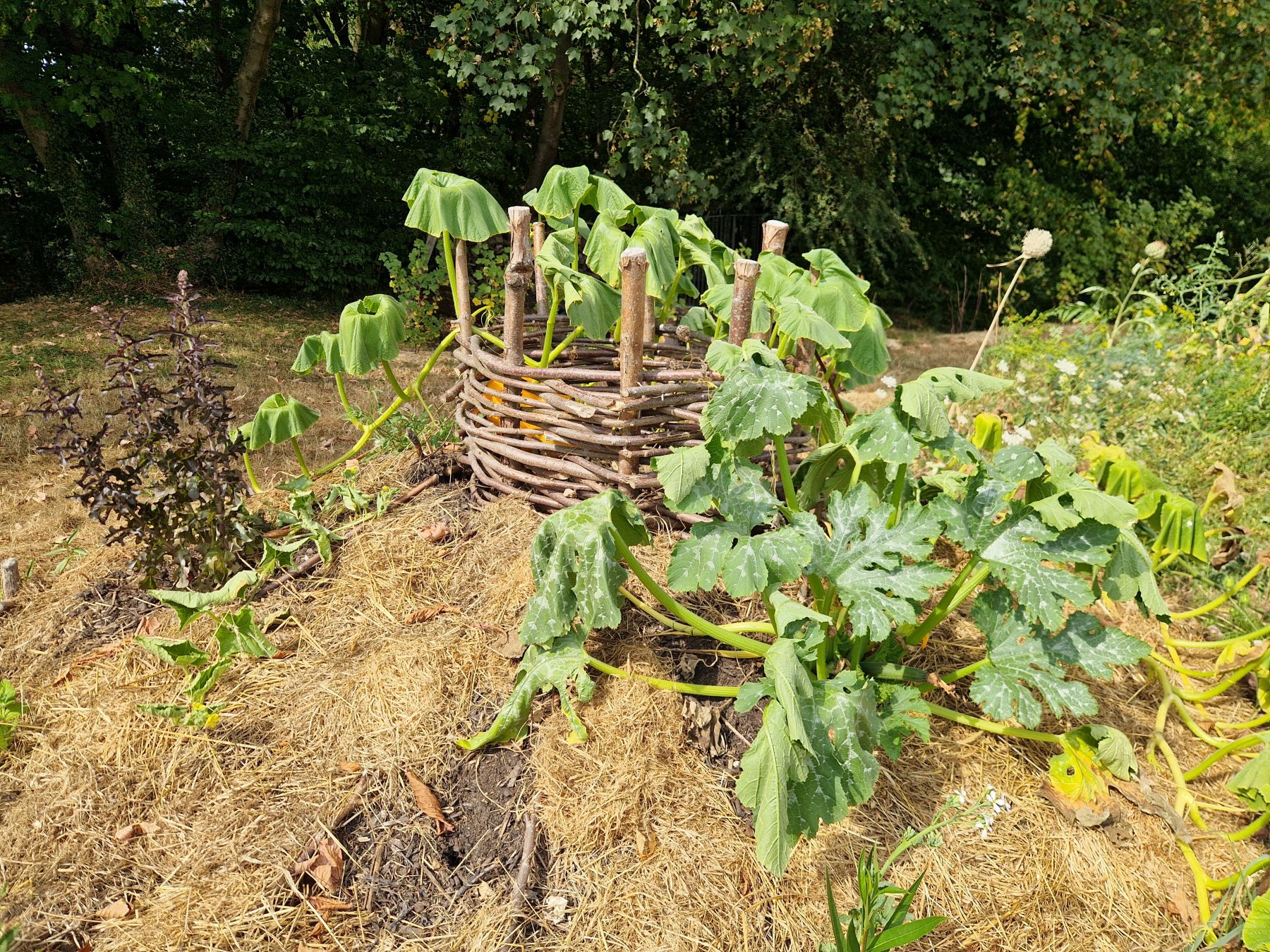
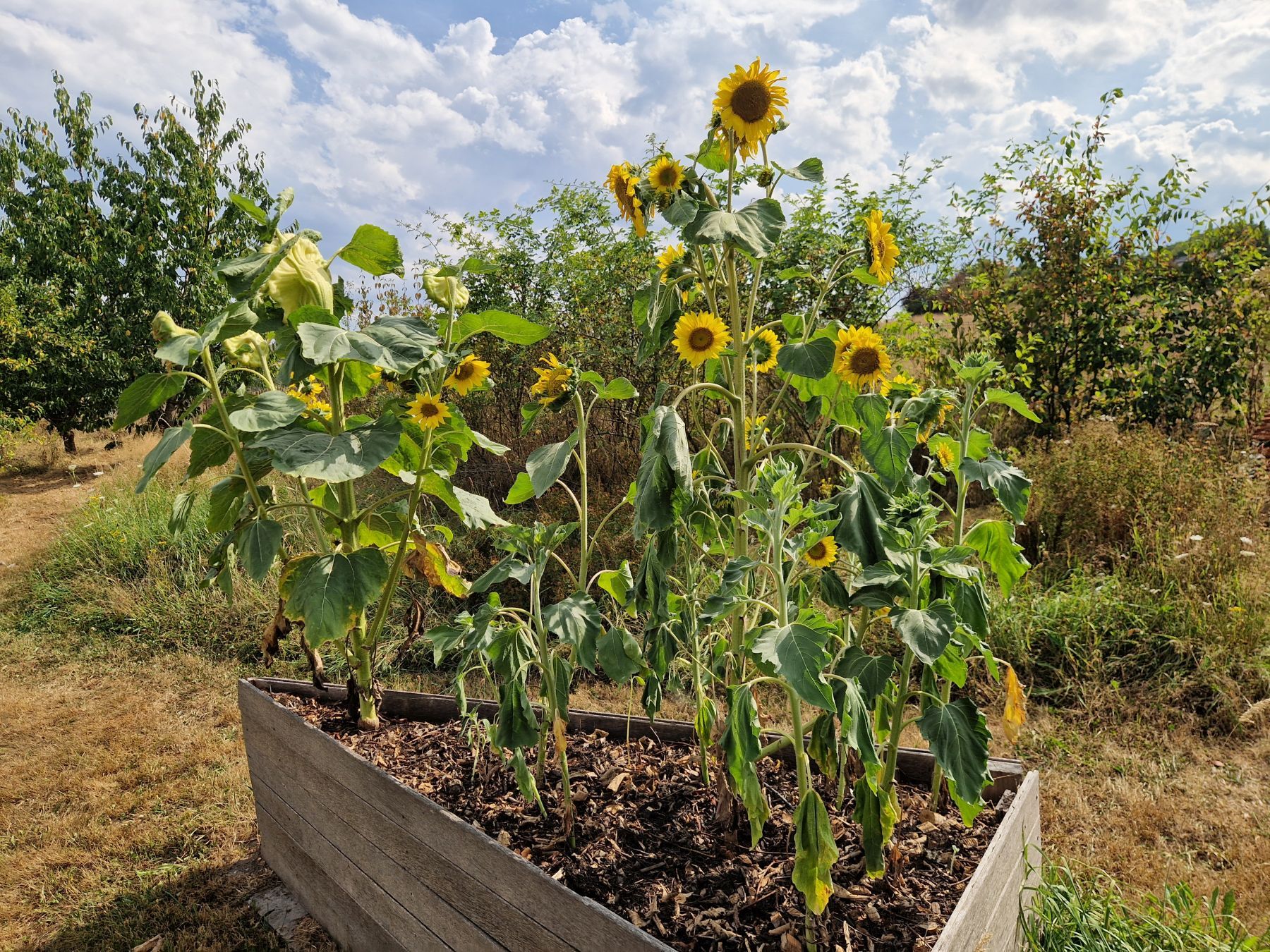
In the vegetable garden, the yield of tomatoes, courgettes and pumpkins is at its peak, but only provided they are watered regularly. Mediterranean aromatic plants, too, are clearly thriving in this heat. Many annuals, on the other hand, have already finished flowering. They have formed seeds more quickly in order to survive the drought. The hollyhocks and evening primroses, which normally bloom profusely for weeks on end, are now merely a shadow of their former selves.
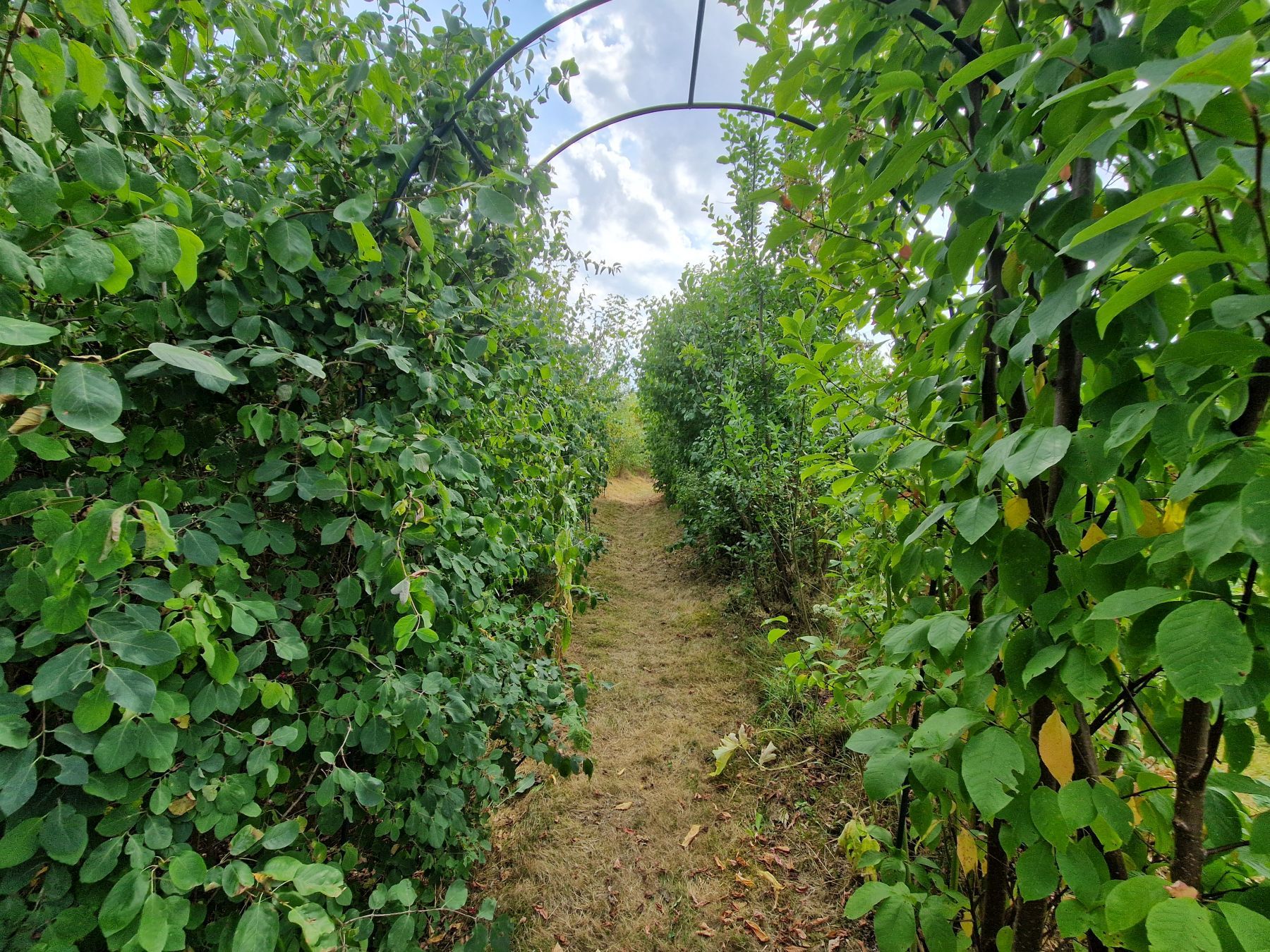
The hedges are holding up well, although some hazel bushes are already in autumn mode. Here and there, withered branches are appearing and the leaves of the dogwoods are drooping. The woodland area looks the most resilient, and our shady corner with ferns and field sedge also remains remarkably fresh.
So it’s a mixed picture, with clear winners and losers.
For the plants themselves, this needn’t be immediately dramatic. During prolonged drought, they switch to survival mode. They close their stomata to limit water loss, grow more slowly, produce fewer new shoots and enter summer dormancy earlier. Many species flower for a shorter period and set seed more quickly. They are, as it were, waiting for better times.
Thanks to their deep root systems or their seeds, most perennials will sprout again as soon as there is sufficient rain. Other species weaken and become more susceptible to browsing, fungi and diseases. Young trees and shrubs are particularly vulnerable because their roots do not yet reach deep enough.
The greatest concern, however, lies elsewhere. Due to the drought, many perennials are flowering earlier and for a shorter period. They produce fewer and smaller flowers, which also reduces the amount of nectar and seeds. Some biennials even skip a whole flowering year.
This has major consequences for pollinators. Bees, bumblebees, butterflies and numerous other insects depend on nectar and pollen for their food. Our flowering season, which normally runs from March to October, is likely to be several weeks shorter this year. The nectar sources will simply close much earlier. Whereas in other years we still had flowers well into October, I expect that by early September there will be very little flowering left. And insects, after all, form the basis of the entire food web. Fewer insects ultimately also means less food for birds, small mammals, amphibians and other insectivores.
Unfortunately, we’re seeing this in animal rescue centres too. At CREAVES Andenne, where I’ve now been volunteering for four years, records are being broken again this year. Never before have we taken in so many young birds. Swallows and swifts jumped out of their nests en masse because the temperatures under the roof tiles are becoming unbearable. In addition, we are seeing more and more weakened animals that are unable to find enough food or are suffering from the heat.
The drying up of pools, canals and other water sources is also becoming an increasingly serious problem. Amphibians, in particular, are especially vulnerable as a result. During the heatwave in May, around 75 animals were brought in on a single day. That is unprecedented.
A natural garden is generally much more resilient than a traditionally landscaped garden. The wide variety of plants, trees, shrubs and different microclimates means that such a garden is better able to withstand extremes. However, even that resilience has its limits when heat and drought persist for weeks on end.
We’d like to share a few tips to help make your garden climate-resilient:
- Minimise hard surfaces so that rainwater can infiltrate as much as possible, and collect as much rainwater as you can. Whereas a 10,000-litre rainwater tank used to be sufficient, it now turns out to be inadequate for many gardens.
- Create wet areas such as a pond or wadi. If there isn’t space for that, even a small mini-pond or bowl with fresh water and a few stones can make a world of difference to birds and insects.
- Create cool shelters using brushwood piles, deadwood, piles of stones or leaf compost in shady spots. Such areas retain moisture for a long time.
- Create a mosaic of habitats with sun, partial shade and shade. Trees, shrubs and hedges not only promote biodiversity but also provide shade.
- Allow parts of the grass to grow longer. A combination of lawn, rougher patches and flower meadows retains more moisture and creates a variety of habitats.
- It is best to plant and sow in autumn. This allows plants to develop a strong root system over the winter.
- Limit the number of potted plants, as these require a lot of extra water during dry summers.
- Only water newly planted plants when there is no rain. In larger gardens, it is neither feasible nor often necessary to water everything.
- Never leave the soil bare. Mulch and compost reduce evaporation and improve soil life.
- Opt for native and deep-rooted plants wherever possible. Mediterranean plants and some climate-adapted trees also thrive remarkably well.
Every dry summer teaches us anew just how important resilience is. No single plant species, no single tree and no single solution will make our gardens climate-resilient. The strength lies precisely in diversity. A garden with trees, shrubs, flower meadows, ponds and a rich variety of plants copes with extremes much better than a garden consisting of lawn and a few ornamental plants. We cannot change the climate from our back garden, but we can design our gardens so that they are better equipped to withstand whatever lies ahead. And at the same time, we offer thousands of plants and animals a place where they can still survive, even in difficult years.
Now we’re mainly looking forward to some rain. Because no matter how resilient a natural garden is, it needs a good soaking every now and then to catch its breath. Let the heavens open!
Comments
- Inderdaad verontrustend hoe lang de droogte en warmte dit keer aanhoudt. We hebben gelukkig nog wat bloeiers in onze tuin ( oleander, agapantis, hortensia’s en zonnehoedjes) niet allemaal inheems maar druk bezocht door hommels en andere insecten. Alle ( kleine ) beetjes helpen allicht. (Johan)
- Mijn tomaten staan van april al in volle grond. Ze kregen water in de eerste week van de aanplant en sedert dan niet meer. Ze staan er heel fris bij en dragen goed. In de serre staat enkel de druivelaar en die heeft geen water nodig omdat die een heel diep wortelstel heeft. Ik geef ook enkel water aan de nieuwe aanplant. Dus weinig water geven?!?!nee, ik heb een 20 tal bomen in pot en op het terras die veel te groot uitgevallen is en die noodgedwongen opgefleurd moest worden met veel potten, grote potten met olijfbomen, gesnoeide taxus, eiken…..veel water geven dus. Ontharden is geen optie al zou ik dit graag willen. Mijn wederhelft houdt van een enorm terras. In de zomer niet te doen om daar te zitten en je, we weten het, het zal steeds erger worden. In de tuin kijk ik nu wat overleeft in die droogte en van die planten komen er in de toekomst nog meer bij. Ik zoek verder en het komt goed (Veerle Van Landtschoote)
Add a comment