


Recycled gardening: nature does the work
12/11/2025
In autumn, many people are busy 'tidying up' the garden and preparing it for winter. You probably notice more branches that have broken off due to gusts of wind, along with plenty of leaves scattered across the lawn and pathways, or you might find pruning debris to clear up. Often a final mow is done so that the lawn stays short during the cold season until spring. All these chores generate a lot of 'green waste'.
In an ecological garden, we talk about of circular gardening: reusing green waste in the garden rather than throwing it away. This doesn't require major interventions, just a different way of thinking. What initially seems like waste turns out to be a precious building material. No need to make trips to the recycling centre! Not only does this save time and money, but step by step it helps build healthier soil and adds more life and diversity to your garden.
Some valuable tips:
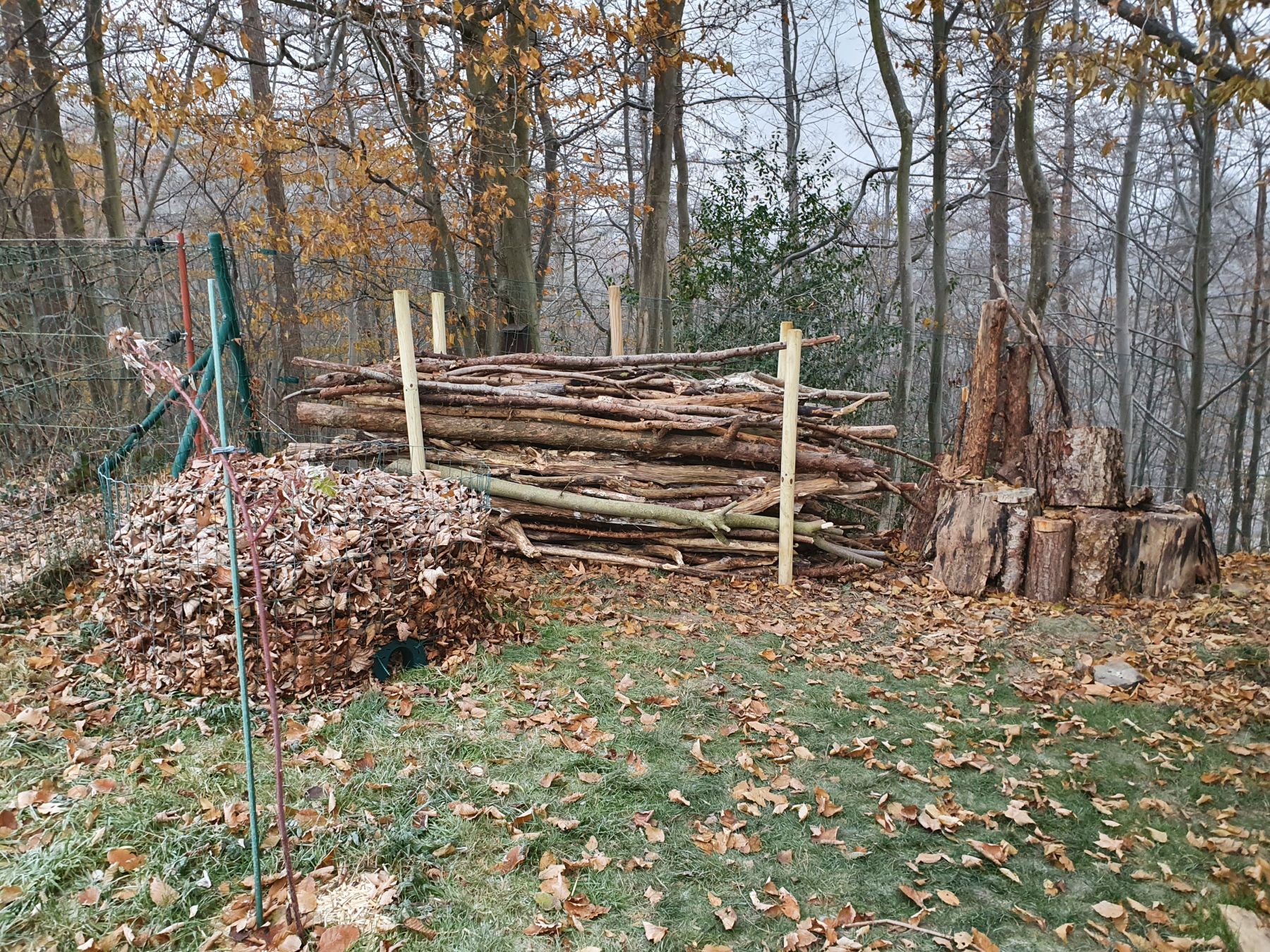
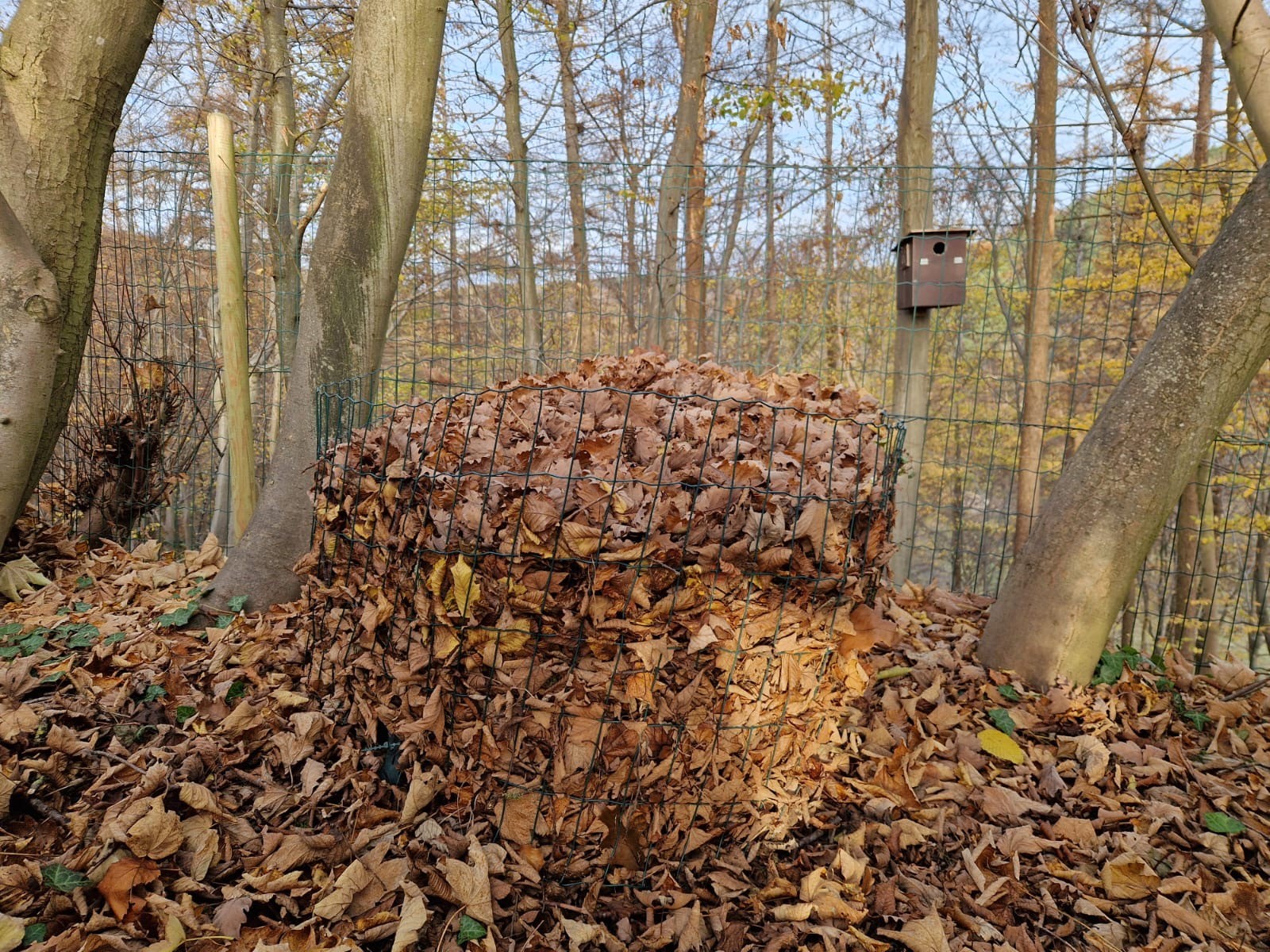
-Let fallen leaves where they are or rake them under trees, hedges, shrubs or along borders. A thick layer of leaves protects the soil from drying out and from frost, and provides shelter for wildlife. Leaf piles or baskets in a shaded spot make an ideal winter home for hedgehogs, toads, moths and other insects. Over time, the leaves break down into rich leaf compost, perfect as soil or a vegetable patch amendment.
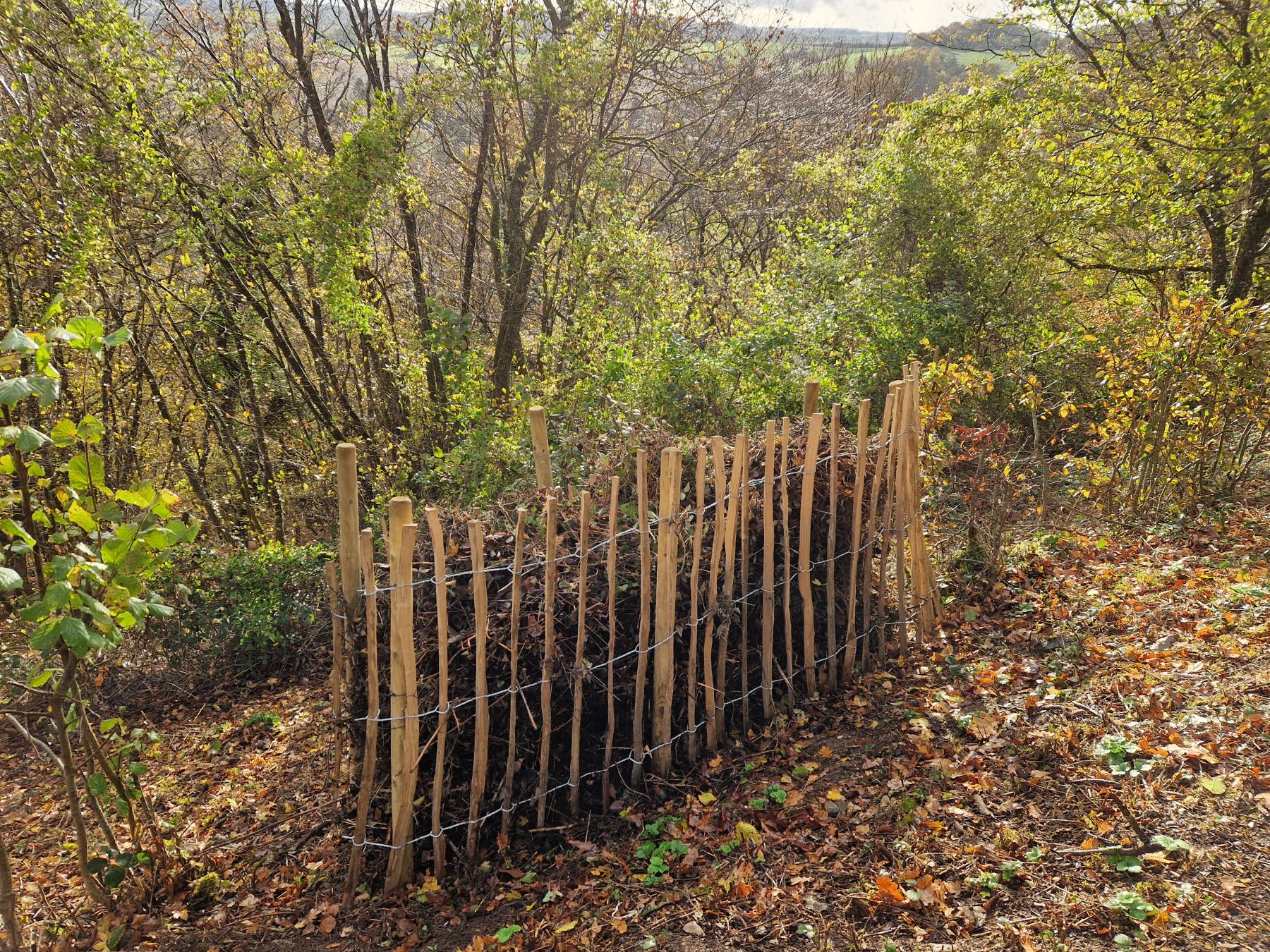
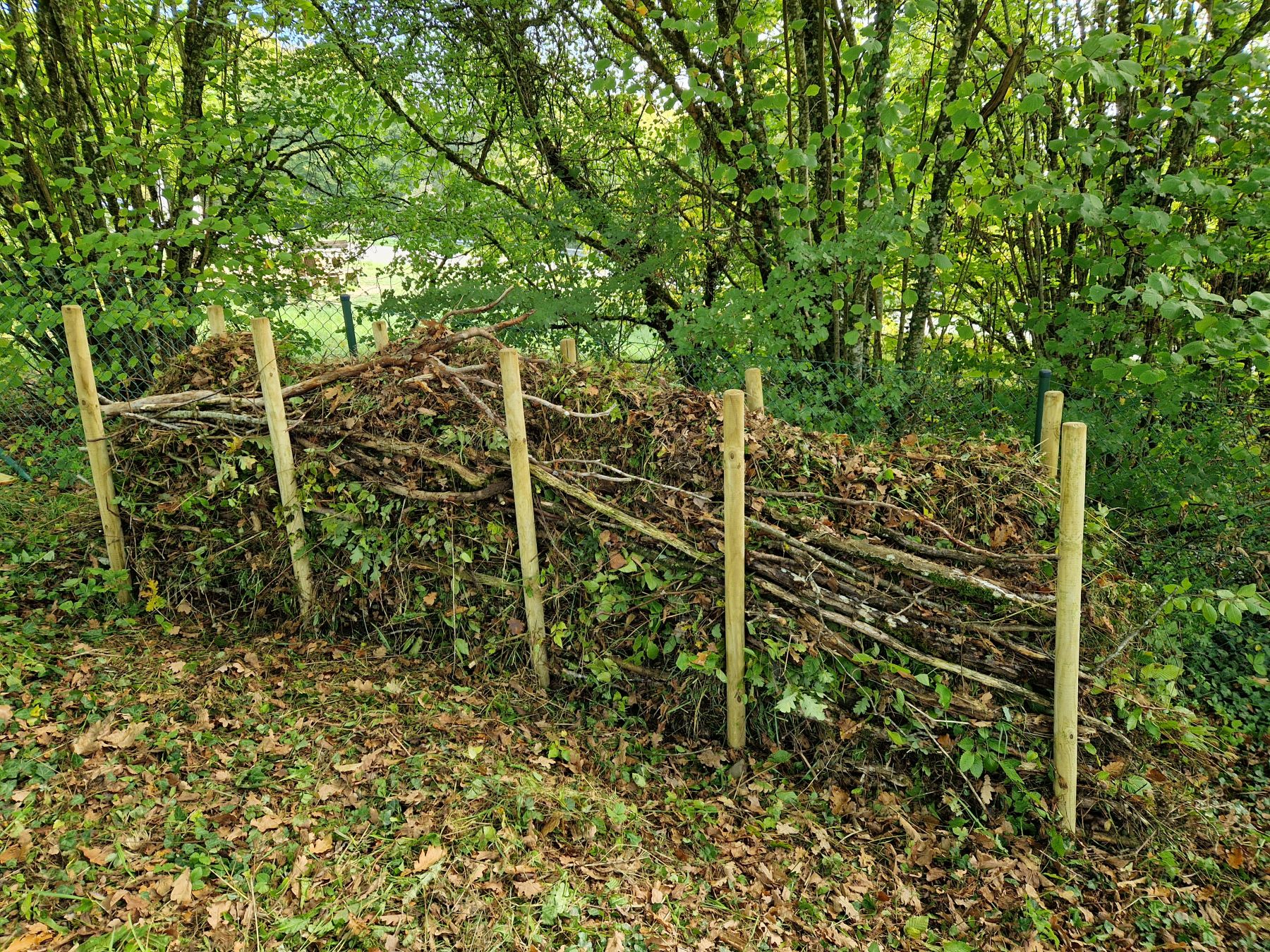
One of our first blogs was about a dead hedge or branch pile, an absolute favourite of IMBY. It is a traditional way of using pruning debris. By stacking branches in layers between two rows of posts you create a solid structure that can last for years. Birds use it as a nesting and foraging site, hedgehogs and mice find shelter, newts and toads overwinter in it, and fungi and insects help break down the wood. It's essentially a mini-ecosystem that adds structure to your garden. You can build it with just branches but also mix it with prunings and grass clippings.
-Avoid bare soil in your garden. Instead, cover it with organic material as mulch such as a thin layer of grass clippings, leaves, wood chips or bark. Mulching acts as a blanket, keeping soil life active even when temperatures drop. The top layer of soil contains most nutrients and soil organisms. In winter, nutrients can leach into the groundwater, which mulching prevents. Heavy rain also erodes soil less when mulched. Another bonus: it reduces the germination of weeds. Leaves, mulch and plant residues provide habitats for insects, toads, hedgehogs and ground beetles - all natural allies in the garden.
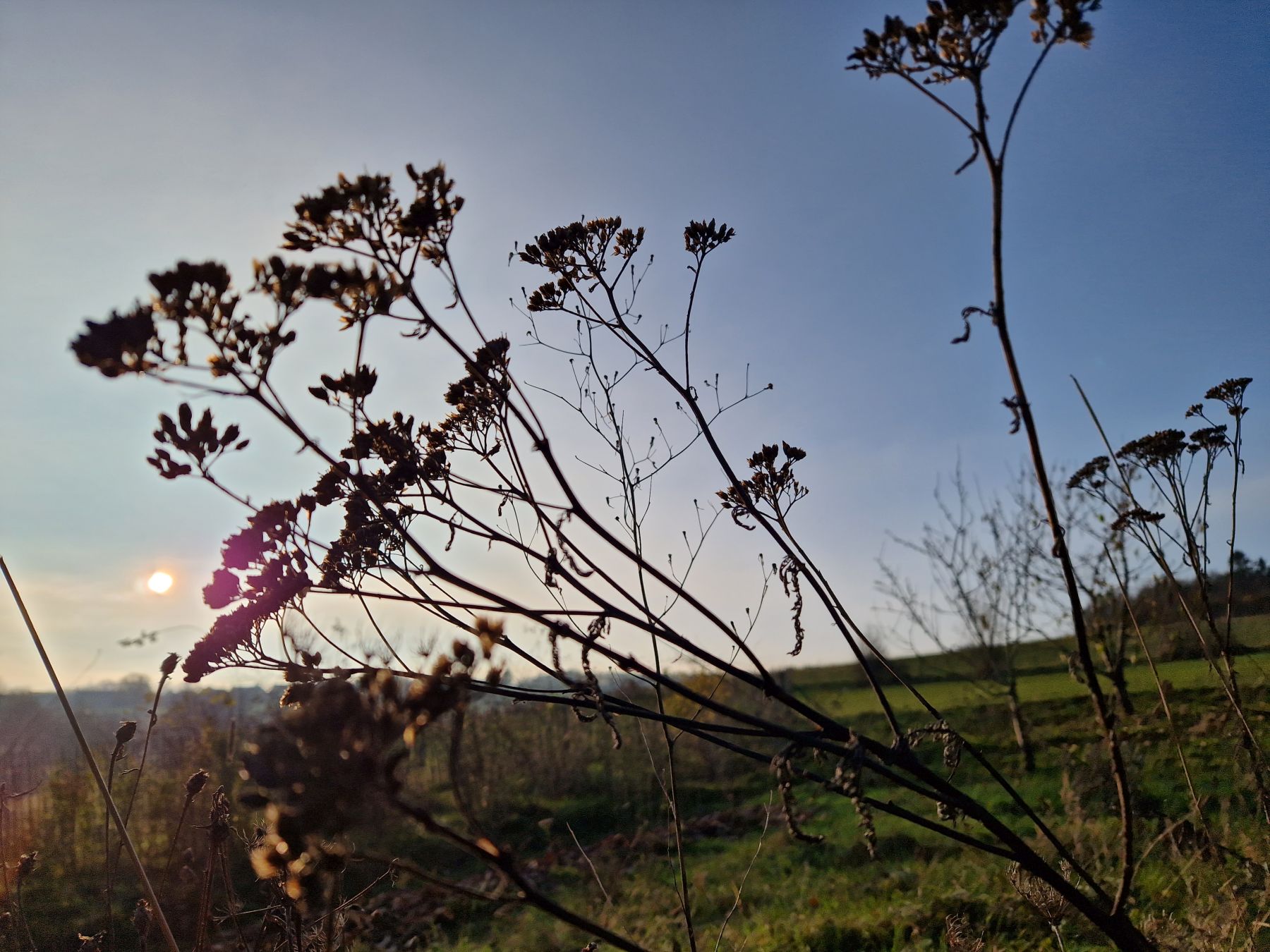
- Leave some of your herbs and perennials standing until March. Many wild bees, lacewings, ladybirds and other beneficial insects use the hollow stems and withered plant parts to overwinter or lay eggs. If you cut everything back in autumn, you disrupt their life cycle before the new generation emerges in spring. Waiting until March to prune allows these insects to complete their cycle, a simple step with large impact on biodiversity. Additionally, seed heads provide food for birds,such as wild teasel or mallow. Many herbs also retain a beautiful winter silhouette, giving the garden structure and visual interest. Frost or snow can make these plants look like natural jewels.
Do you have any examples of circular gardening? Share them in the comments and enjoy experimenting in your garden this autumn!
Comments
- Très bel article, comme souvent! Merci de rappeler des principes qui, espérons-le, deviendront basiques pour nous tous les jardiniers amateurs de la nature (Vincent D.)
- Merci pour ces conseils pour le jardin circulaire! Chez nous aussi à présent on le met en pratique. Amitiés. (Carla & Kerjean)
Add a comment