


The Quiet Strength of Biennial Plants
16/09/2026
Biennial plants are special. They are plants with their own rhythm, and they require just a little more patience. In their first year, they invest in a strong root system underground and a rosette of leaves close to the ground. They remain discreet. After overwintering, they form a long flowering stem in their second year, come into bloom, produce seeds and then die back. But that does not necessarily mean it is over. Some of the seeds fall to the ground and may germinate the following year. Others do nothing. Sometimes the plant does not appear for years and then suddenly pops up again.
Many people do not realise that some plants are biennial. I also did not understand at first why some species ‘disappeared’ from my garden, only to ‘appear’ later in another place. It is therefore worth learning to recognise their leaf rosettes, otherwise you risk removing them as weeds before they have a chance to flower. The ObsIdentify app can certainly help you with this. Below you can see some familiar examples.

Patience pays off, because biennial plants often have a long flowering period and are striking because of their large flower heads. They are also sometimes called structural plants in borders, vertical focal points, as it were. They give your garden more character and charm. Because of their unpredictability, they create a dynamic garden that is different every year, and that keeps it interesting.
Moreover, these plants are valuable as food plants for many insects and also as host plants for some larvae. Their long, hollow flowering stems are ideal for solitary bees and other insects that use them as shelter to overwinter. So don't tidy up your garden completely, and leave the stems standing until early next spring. At the same time, they provide a decorative element in the winter garden and offer valuable seeds for birds.
Here are some examples of wonderful biennial plants.
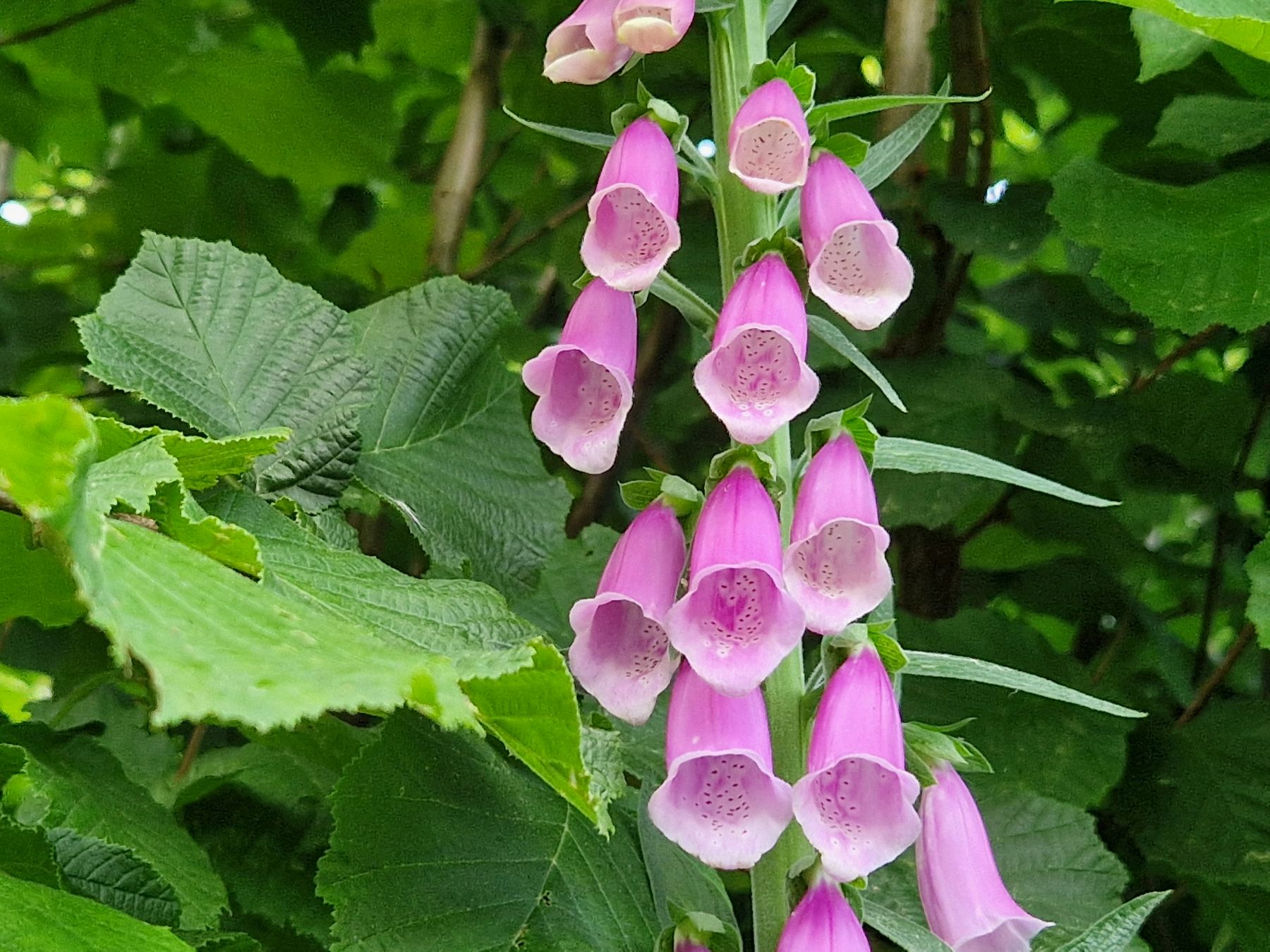
At the edge of the woodland, we find one of the best-known witches’ herbs, the poisonous foxglove (Digitalis purpurea), with its beautiful tall flower stems, which are heavily visited by bumblebees. You can also find another biennial plant in the shade: honesty (Lunaria annua). It is a beautiful spring-flowering plant that produces gorgeous translucent seed pods in autumn, from which it gets its name.
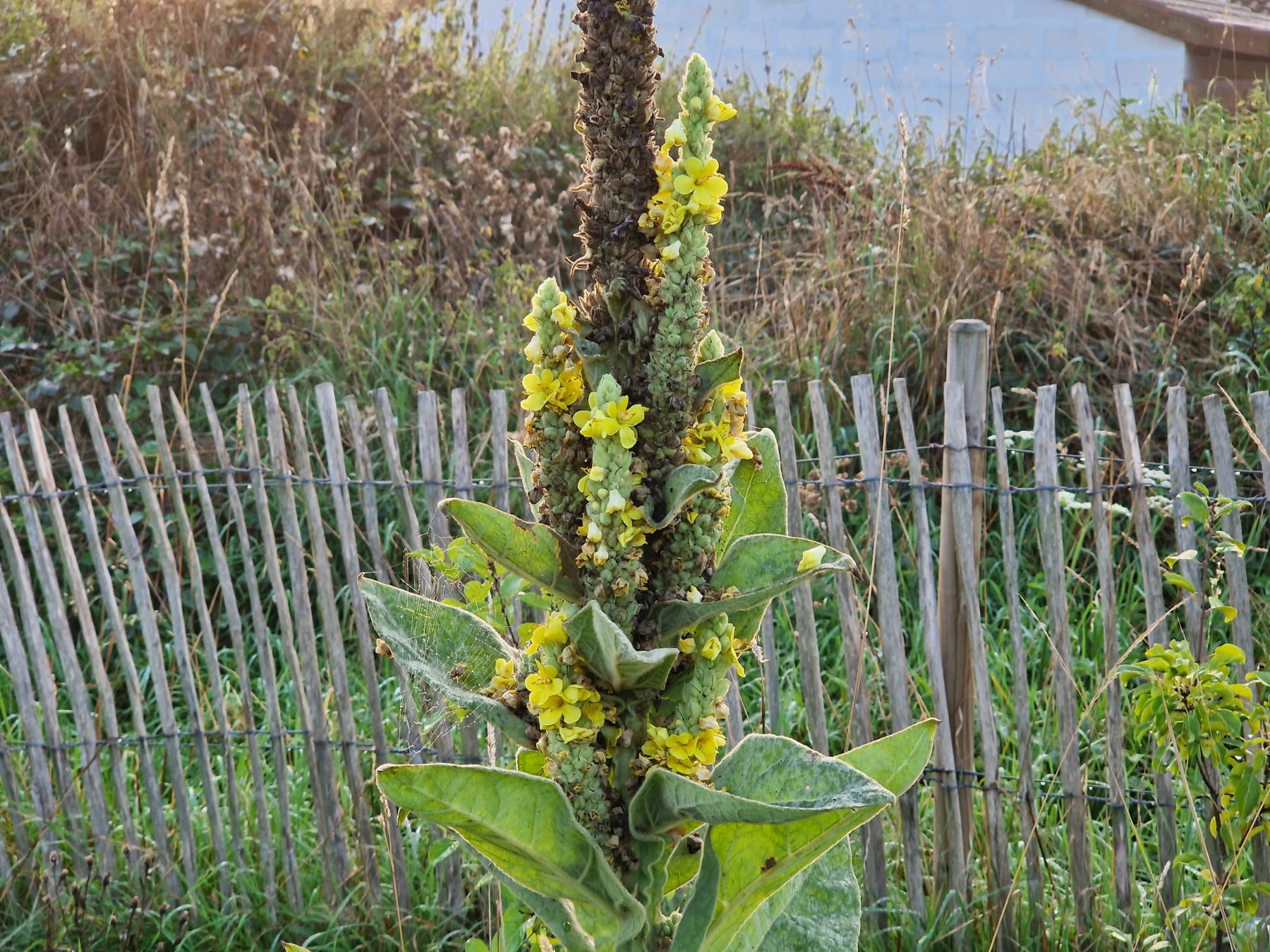
In full sun and in dry places, you will find the imposing great mullein (Verbascum thapsus), with its grey-green, velvety, woolly leaves and tall flower stem bearing beautiful yellow flowers. A few years ago, we had one that was no less than 2 metres tall!
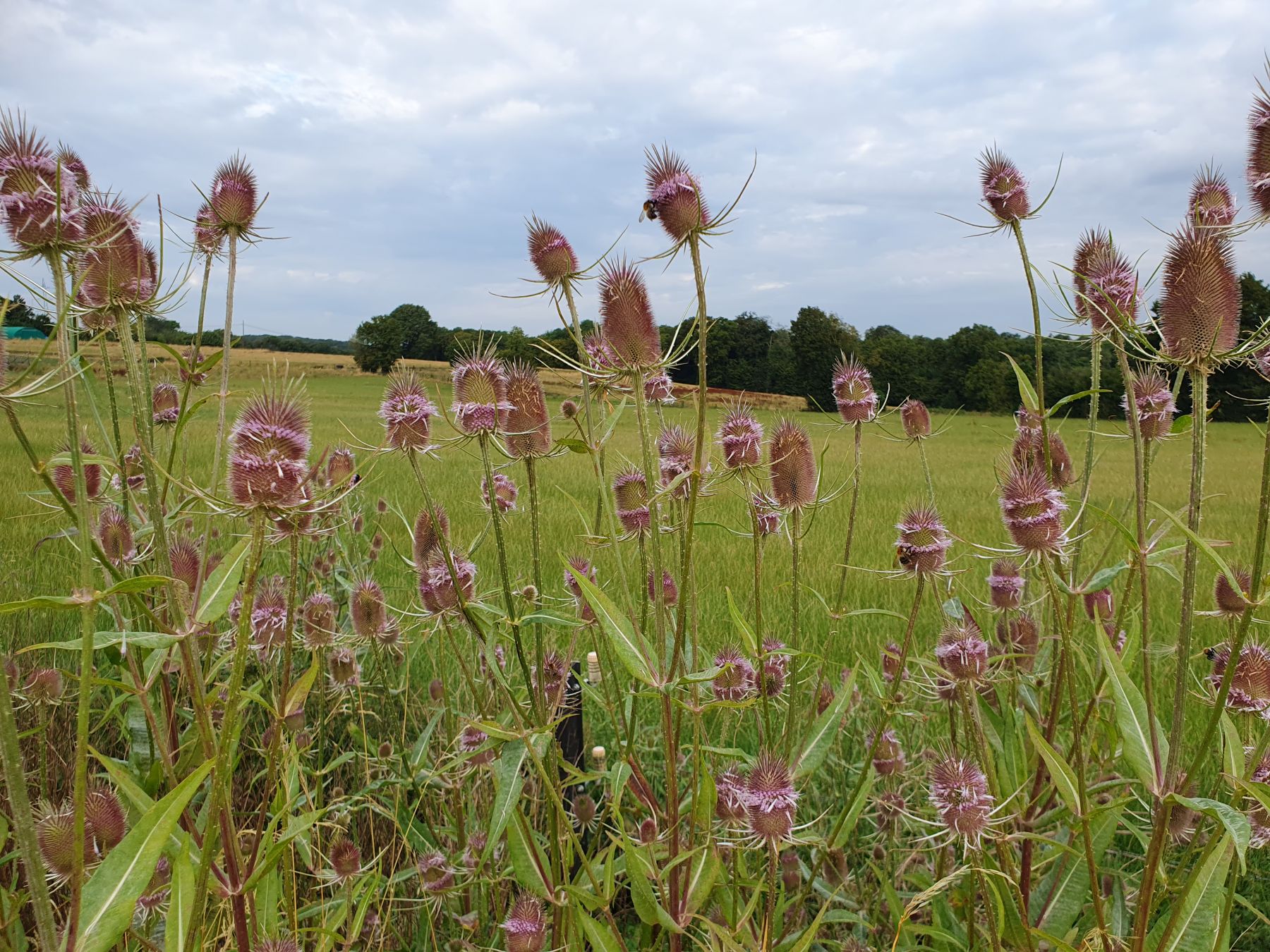
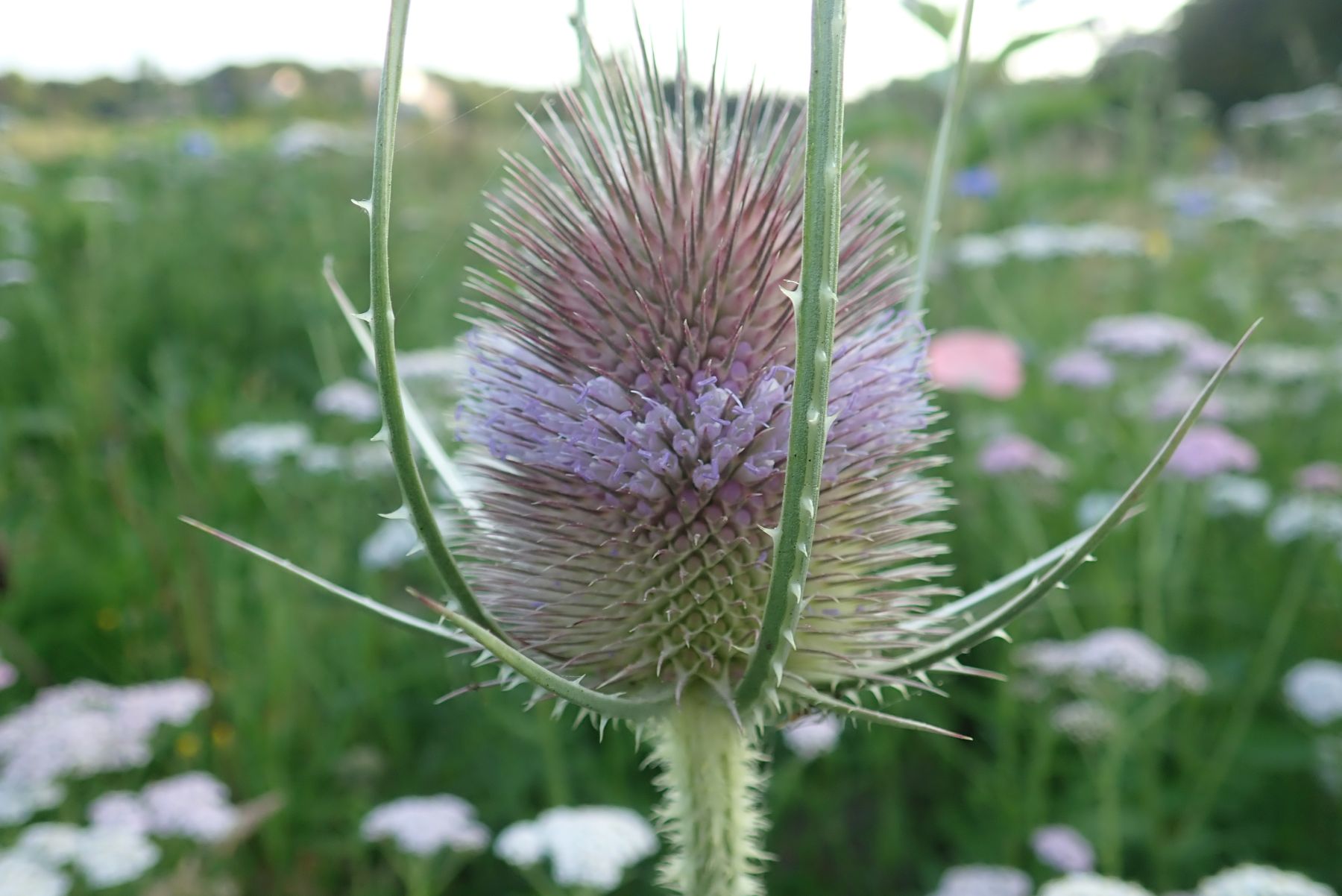
Another sun-lover is the wild teasel (Dipsacus fullonum), an imposing plant that looks a little like a thistle, with spines and large flower heads covered in many small, pale purple flowers. In autumn and winter, wild teasel is a favourite seed plant of the European goldfinch. Its winter silhouette is also beautiful, covered in dew, a layer of snow or full of spider webs. It is a species that can spread quite vigorously by seed, but it is also easy to move or give away to friends.
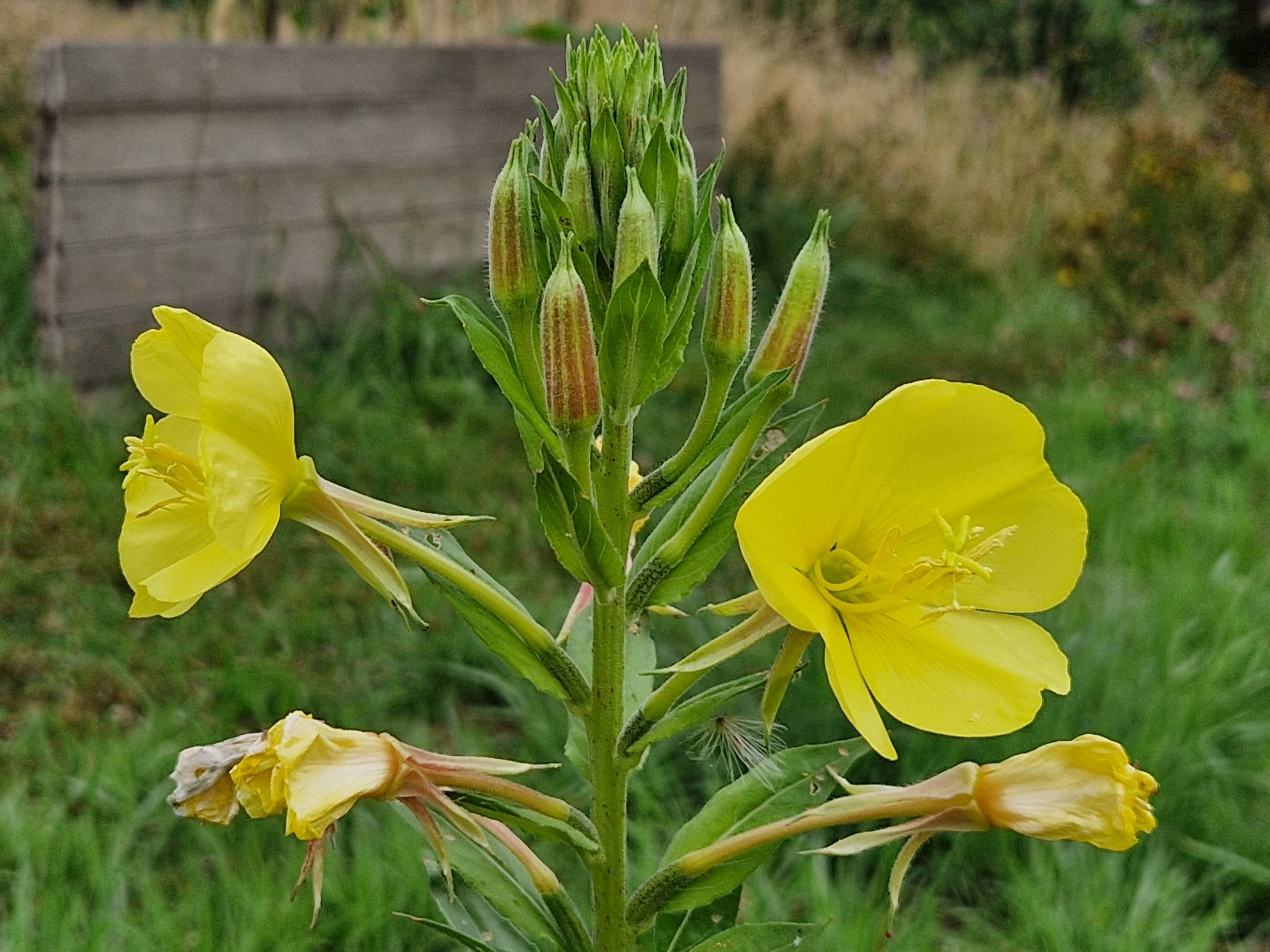
The common evening primrose (Oenothera biennis) is not native, but was introduced to Europe in the 17th century. It is a unique yellow night-blooming plant and therefore a favourite of many moths. Evening primrose flowers for a long time and can easily grow to a metre tall. You can almost watch the flowers open at the end of the afternoon.
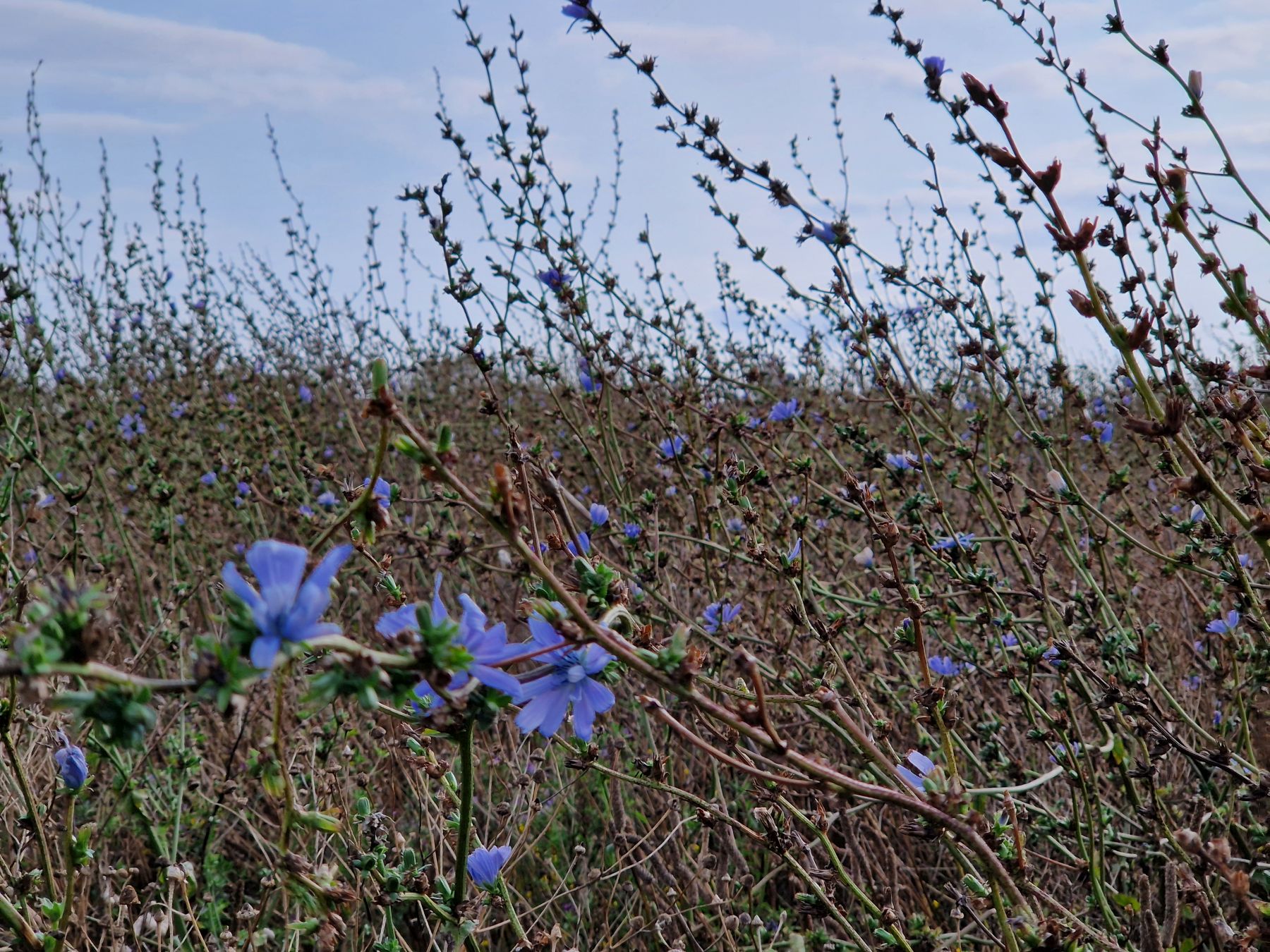
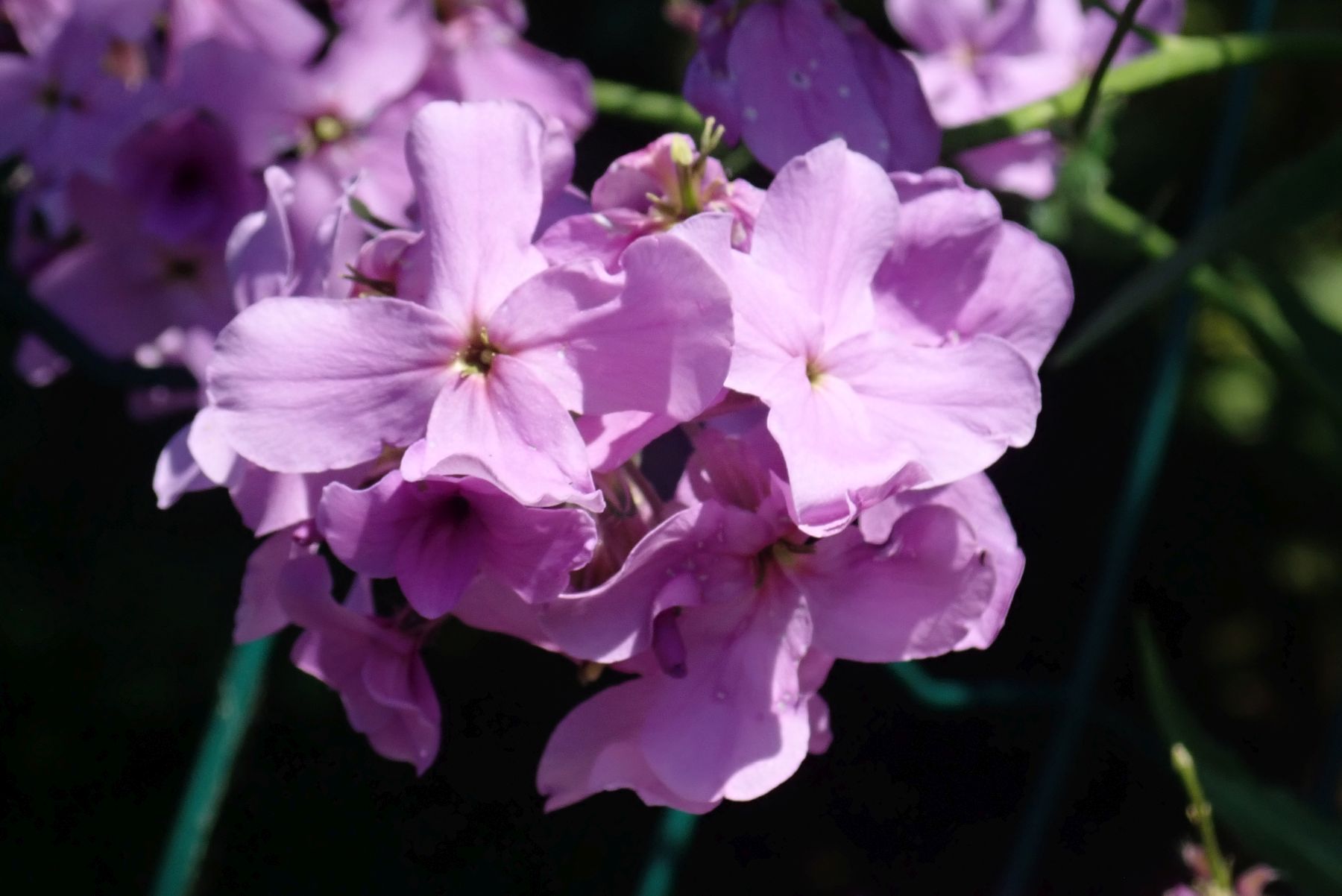
Two of my favourite biennial flowers are sweet rocket (Hesperis matronalis), which flowers beautifully and for a long time in purple, and chicory (Cichorium intybus), with its heavenly blue flowers and strong taproot. Woad (Isatis tinctoria) is a dye plant with beautiful yellow spring flowers, grown for the blue dye, indigo, which was once extracted from its leaves.
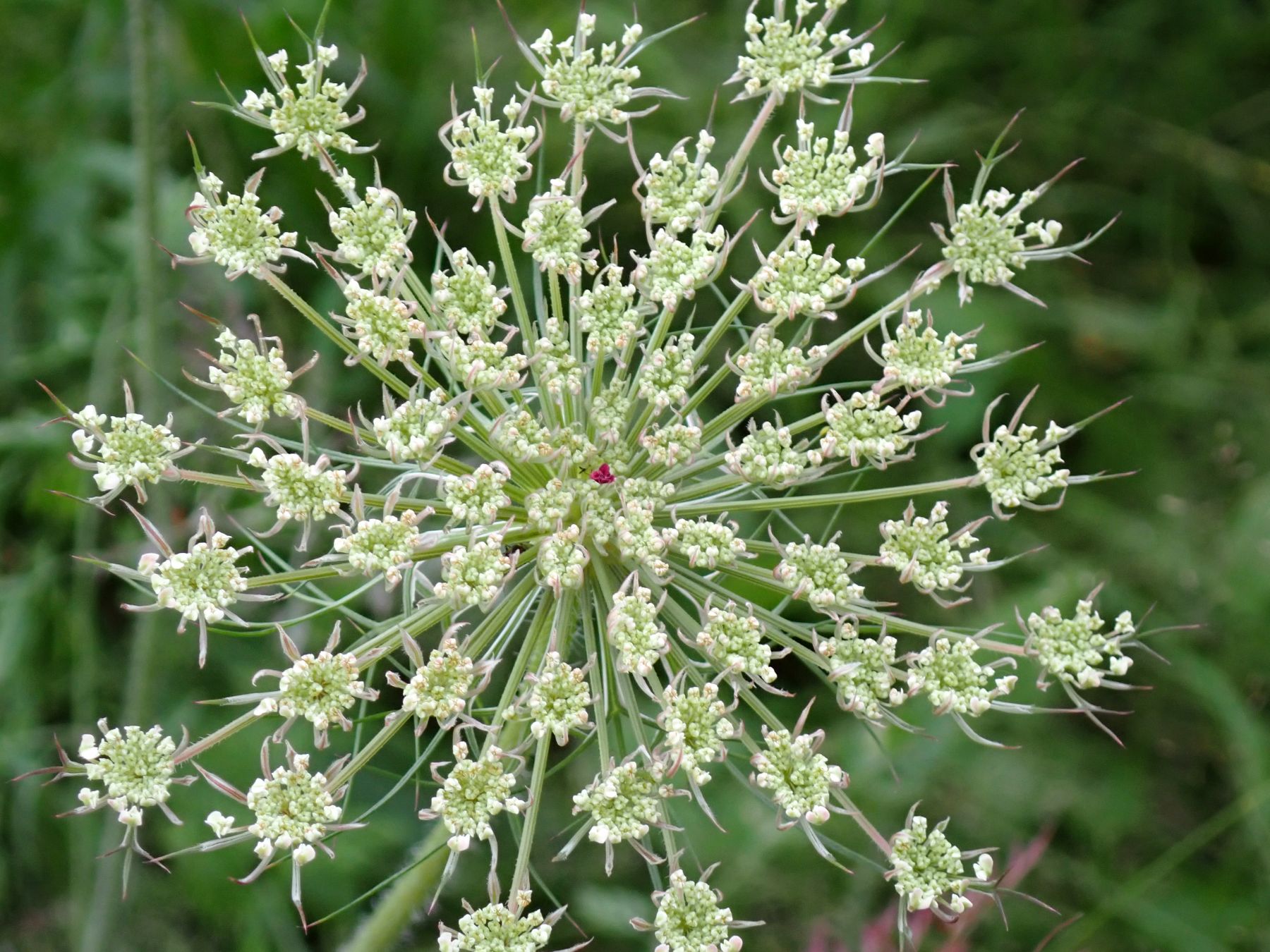
A biennial that almost everyone probably knows is wild carrot (Daucus carota), which readily self-seeds, perhaps sometimes a little too readily. It can sometimes even produce flowers in its first year when conditions are favourable. A fun fact is that this member of the umbellifer family has one particularly striking dark red or purple flower in the centre, known as the ‘fly-attracting flower’.
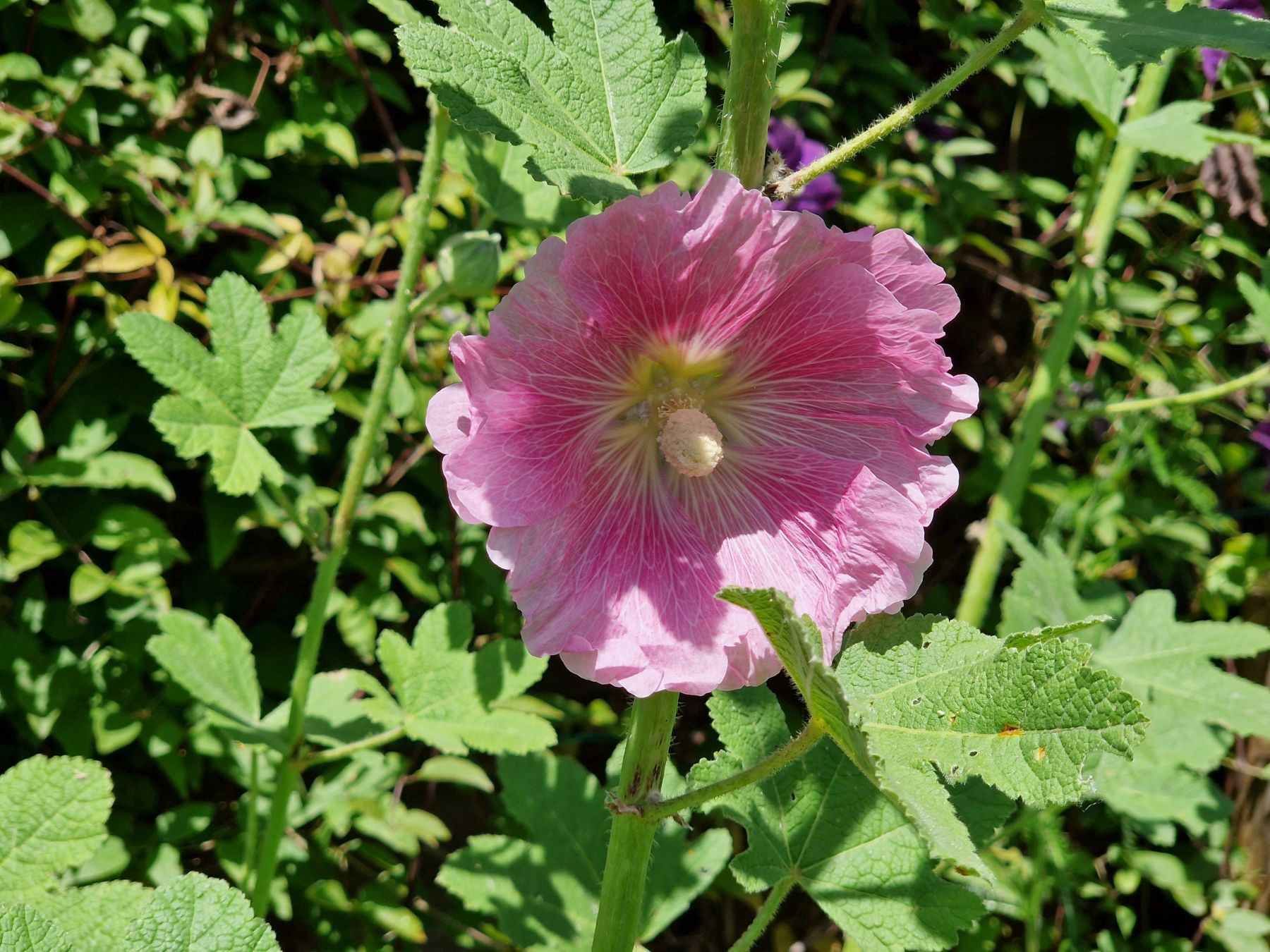
A beautiful plant that has become naturalised here and is often found along stone walls, on façades and in cities is the hollyhock (Alcea rosea). In ‘theory’, this is also a biennial, but in reality it can flower for many years in succession and behave like a perennial. The same is true of the beautiful pink musk mallow (Malva moschata).
Whether a biennial plant actually comes into flower depends on various circumstances. The amount of sunlight, available space, soil, moisture and temperature all play a role. The winter and the course of spring can also be decisive. A plant may therefore be present, but in a way still waiting for the right moment to flower. They respond to their environment.
If you would like just a little more predictability and flowers from your biennials every year, sow or plant them two years in a row. These plants will alternate in flowering and, with a little luck, self-seed to provide a wonderful abundance of flowers. But be sure to let yourself be surprised as well. Plants do not always stick to our plans, and in a natural garden, that unpredictability is part of the fun. In this way, the plants themselves help shape the garden with you.
Some biennials are permanent residents, others disappear temporarily, and still others temporarily take their place. That is what makes gardening exciting. It is also why it is so fascinating to observe a garden over several years. One season tells only part of the story. What looks like a failure today may turn into a surprise next year. After all, nature still knows best.
Many people do not realise that some plants are biennial. I also did not understand at first why some species ‘disappeared’ from my garden, only to ‘appear’ later in another place. It is therefore worth learning to recognise their leaf rosettes, otherwise you risk removing them as weeds before they have a chance to flower. The ObsIdentify app can certainly help you with this. Below you can see some familiar examples.
Patience pays off, because biennial plants often have a long flowering period and are striking because of their large flower heads. They are also sometimes called structural plants in borders, vertical focal points, as it were. They give your garden more character and charm. Because of their unpredictability, they create a dynamic garden that is different every year, and that keeps it interesting.
Moreover, these plants are valuable as food plants for many insects and also as host plants for some larvae. Their long, hollow flowering stems are ideal for solitary bees and other insects that use them as shelter to overwinter. So don't tidy up your garden completely, and leave the stems standing until early next spring. At the same time, they provide a decorative element in the winter garden and offer valuable seeds for birds.
Here are some examples of wonderful biennial plants.
At the edge of the woodland, we find one of the best-known witches’ herbs, the poisonous foxglove (Digitalis purpurea), with its beautiful tall flower stems, which are heavily visited by bumblebees. You can also find another biennial plant in the shade: honesty (Lunaria annua). It is a beautiful spring-flowering plant that produces gorgeous translucent seed pods in autumn, from which it gets its name.
In full sun and in dry places, you will find the imposing great mullein (Verbascum thapsus), with its grey-green, velvety, woolly leaves and tall flower stem bearing beautiful yellow flowers. A few years ago, we had one that was no less than 2 metres tall!
Another sun-lover is the wild teasel (Dipsacus fullonum), an imposing plant that looks a little like a thistle, with spines and large flower heads covered in many small, pale purple flowers. In autumn and winter, wild teasel is a favourite seed plant of the European goldfinch. Its winter silhouette is also beautiful, covered in dew, a layer of snow or full of spider webs. It is a species that can spread quite vigorously by seed, but it is also easy to move or give away to friends.
The common evening primrose (Oenothera biennis) is not native, but was introduced to Europe in the 17th century. It is a unique yellow night-blooming plant and therefore a favourite of many moths. Evening primrose flowers for a long time and can easily grow to a metre tall. You can almost watch the flowers open at the end of the afternoon.
Two of my favourite biennial flowers are sweet rocket (Hesperis matronalis), which flowers beautifully and for a long time in purple, and chicory (Cichorium intybus), with its heavenly blue flowers and strong taproot. Woad (Isatis tinctoria) is a dye plant with beautiful yellow spring flowers, grown for the blue dye, indigo, which was once extracted from its leaves.
A biennial that almost everyone probably knows is wild carrot (Daucus carota), which readily self-seeds, perhaps sometimes a little too readily. It can sometimes even produce flowers in its first year when conditions are favourable. A fun fact is that this member of the umbellifer family has one particularly striking dark red or purple flower in the centre, known as the ‘fly-attracting flower’.
A beautiful plant that has become naturalised here and is often found along stone walls, on façades and in cities is the hollyhock (Alcea rosea). In ‘theory’, this is also a biennial, but in reality it can flower for many years in succession and behave like a perennial. The same is true of the beautiful pink musk mallow (Malva moschata).
Whether a biennial plant actually comes into flower depends on various circumstances. The amount of sunlight, available space, soil, moisture and temperature all play a role. The winter and the course of spring can also be decisive. A plant may therefore be present, but in a way still waiting for the right moment to flower. They respond to their environment.
If you would like just a little more predictability and flowers from your biennials every year, sow or plant them two years in a row. These plants will alternate in flowering and, with a little luck, self-seed to provide a wonderful abundance of flowers. But be sure to let yourself be surprised as well. Plants do not always stick to our plans, and in a natural garden, that unpredictability is part of the fun. In this way, the plants themselves help shape the garden with you.
Some biennials are permanent residents, others disappear temporarily, and still others temporarily take their place. That is what makes gardening exciting. It is also why it is so fascinating to observe a garden over several years. One season tells only part of the story. What looks like a failure today may turn into a surprise next year. After all, nature still knows best.
Comments
No comments have been added yet. Be the first to add a comment. Add a comment